How much electricity does the full solar panel system produce in summer?
In summer, besides the hot weather, the sunlight is also very strong. Many people think that full solar panel system must generate a lot of electricity in summer. In fact, this is not the case.In fact, spring and autumn are the seasons when full solar panel system Achieve peak value in a year. Why on earth is that? Let Mars Solar, full solar panel system suppliers explain to you.

Although summer has the advantage of strong illumination and increasing illumination time, it also has a negative impact on the full solar panel system. Such as high summer temperature, high air humidity, heavy rainfall, thunderstorms and other frequent weather.All of these factors will affect the power generation capacity of full solar panel system.
Why do complete solar panel system reduce generation in summer? Power decrease caused by high temperature in summer.As we all know, the output power of residential solar panel system is closely related to the irradiation they receive. The standard for testing residential solar panel system is STC (Standard test temperature: 25 degrees Celsius ). In component parameters,it has power temperature coefficient is 0.4%/1℃. When ambient temperature reaches 40 degrees Celsius,the surface temperature of residential solar panel system can reach 57 degrees Celsius. This is much higher than the test temperature. Because of the high temperature in summer, the power loss caused by temperature is also one of the important reasons.
-
 30kW Solar System Philippines: Cost, Output & Monthly Savings (2026)30kW solar system for Philippine cafes and restaurants with 60kWh battery storage. Cost ~$13,000 (±10%), saves ₱69,000+/month at ₱14.5/kWh, payback in 11 months. Based on real Metro Manila project data.
Do you like ?0
Read more -
 60kW Solar System Philippines: Cost, Output & Monthly Savings (2026)60kW solar system for Philippine resorts and hotels with 120kWh battery storage. Cost ~$25,500 (±10%), saves ₱139,000+/month at ₱14.5/kWh, payback in 16months. Based on real Cebu beachfront resort project data.
Do you like ?0
Read more -
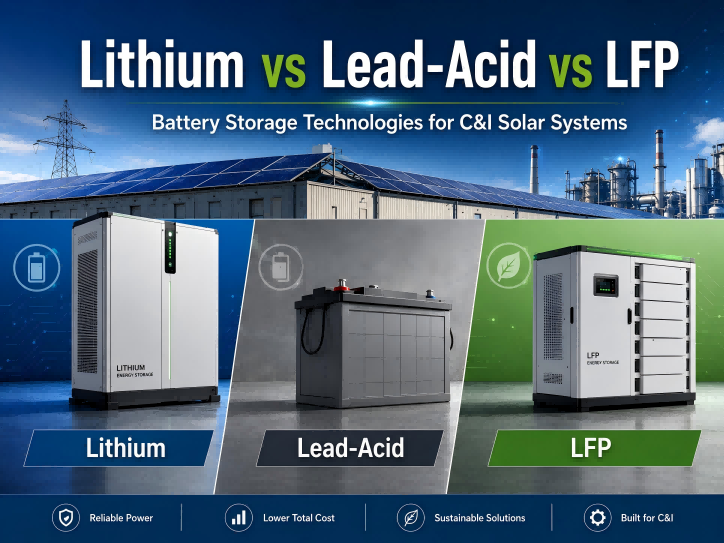 Lithium vs Lead-Acid vs LFP | Battery Storage Technologies for C&I Solar SystemsCompare LFP, NMC, and lead-acid batteries across 12 performance dimensions and 20-year TCO. For daily-cycling C&I solar systems in 2026, LFP delivers 4,000–6,000 cycles, the lowest cost per kWh delivered, and the safest chemistry — making it the only rati
Do you like ?0
Read more -
 Complete Solar Power System Buyer’s Guide for Commercial & Industrial FacilitieA step-by-step buyer's guide for commercial and industrial decision-makers evaluating solar power systems (20kW-1MW). Covers 8-step decision framework: objective definition, load analysis, site assessment, system configuration, battery sizing, ROI calcula
Do you like ?0
Read more -
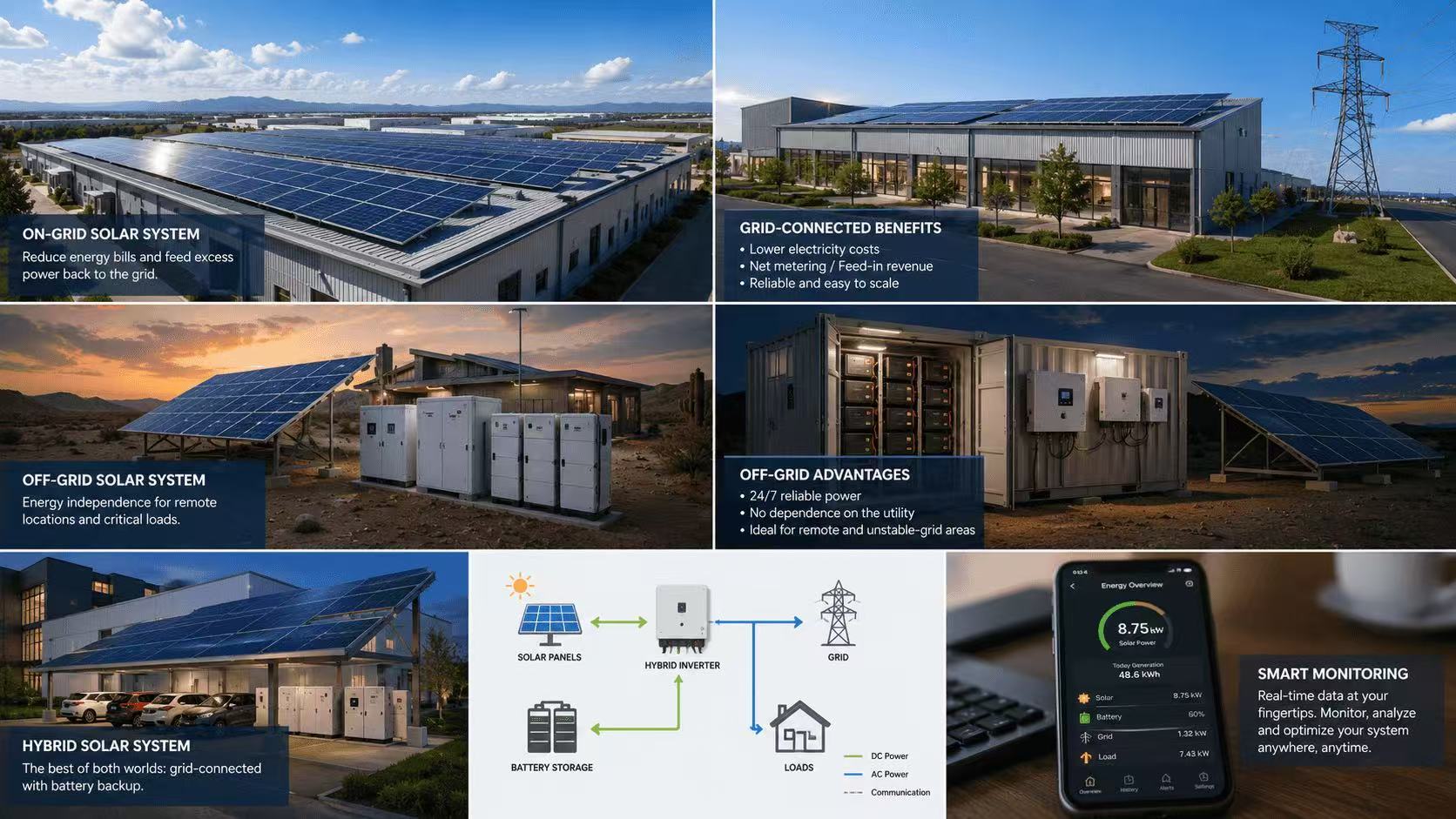 On-Grid vs Off-Grid Solar Power Systems: A B2B Decision Guide for 2026This guide compares on-grid vs off-grid solar power systems for commercial and industrial buyers. Includes detailed cost breakdowns, ROI analysis, and region-specific recommendations for markets like Nigeria, Kenya, Philippines, and Sudan.
Do you like ?0
Read more -
 Solar Power in the Philippines: 2026 Wholesale Import GuideA 2026 B2B procurement guide for solar distributors and EPC contractors entering the Philippine market. Covers net metering policy, product selection, factory pricing, and step-by-step import workflow from China to Manila. Built for wholesale buyers sourc
Do you like ?0
Read more