NTPC, the National Electric Power Company of India, recently announced that it will cut its coal power generation by half within the next ten years, while increasing the share of renewable Electric Solar System energy power generation.
A senior executive of the company said that the company plans to list its green energy subsidiary NTPC Renewable Energy Co., Ltd. in the next 18 months and will invest 2.5 trillion rupees to increase renewable energy generation capacity to fill the reduction in coal power. Brings the gap.
Among them, the equity part accounts for about 500 billion rupees, and the rest will be realized through long-term loans, bonds and other forms. The company also plans to obtain preferential loans through an agreement with the National Investment and Infrastructure Fund signed a year ago.
NTPC has promised to achieve 60 GW of renewable energy installed capacity by 2032. By then, the total installed capacity will reach 132 GW, which is a huge increase from the previously planned 30 GW renewable energy capacity by 2032.
NTPC's goal is to expand to 8,000 megawatts by 2032 by increasing 4,000 megawatts of clean energy capacity each year, while also reducing net energy intensity by 10%.
The company's current power generation capacity is 66 GW, of which 54 GW or 82% is coal-fired power generation. NTPC is discussing the development of large-scale offshore wind power plants with oil and gas companies through a joint venture signed last year.
In view of the fact that offshore wind power is a capital-intensive project, the Indian government is considering providing feasibility gap funding for offshore wind energy projects. India has set a goal of establishing 30 gigawatts of offshore wind power installed capacity by 2032.
NTPC has announced plans to build a 5 GW solar park in Gujarat for 2500 crore, and has similar plans in Rajasthan. The renewable capacity increase plan will include the establishment of solar, wind, hydro, biomass, and energy storage plants on its own or with various companies/states.
Currently, NTPC has a renewable energy project of 1173 MW, and 2300 MW is under implementation.
-
 100kVA 100kW Off-Grid Solar Power Plant | Mars Solar 2026 Specification & Price100kVA 100kW Off-Grid Solar Power Plant | Mars Solar 2026 Specification & Price Mars Solar’s 100kVA 100kW off-grid solar power plant is a high-efficiency, scalable renewable energy solution engineered for commercial and industrial application
Do you like ?0
Read more -
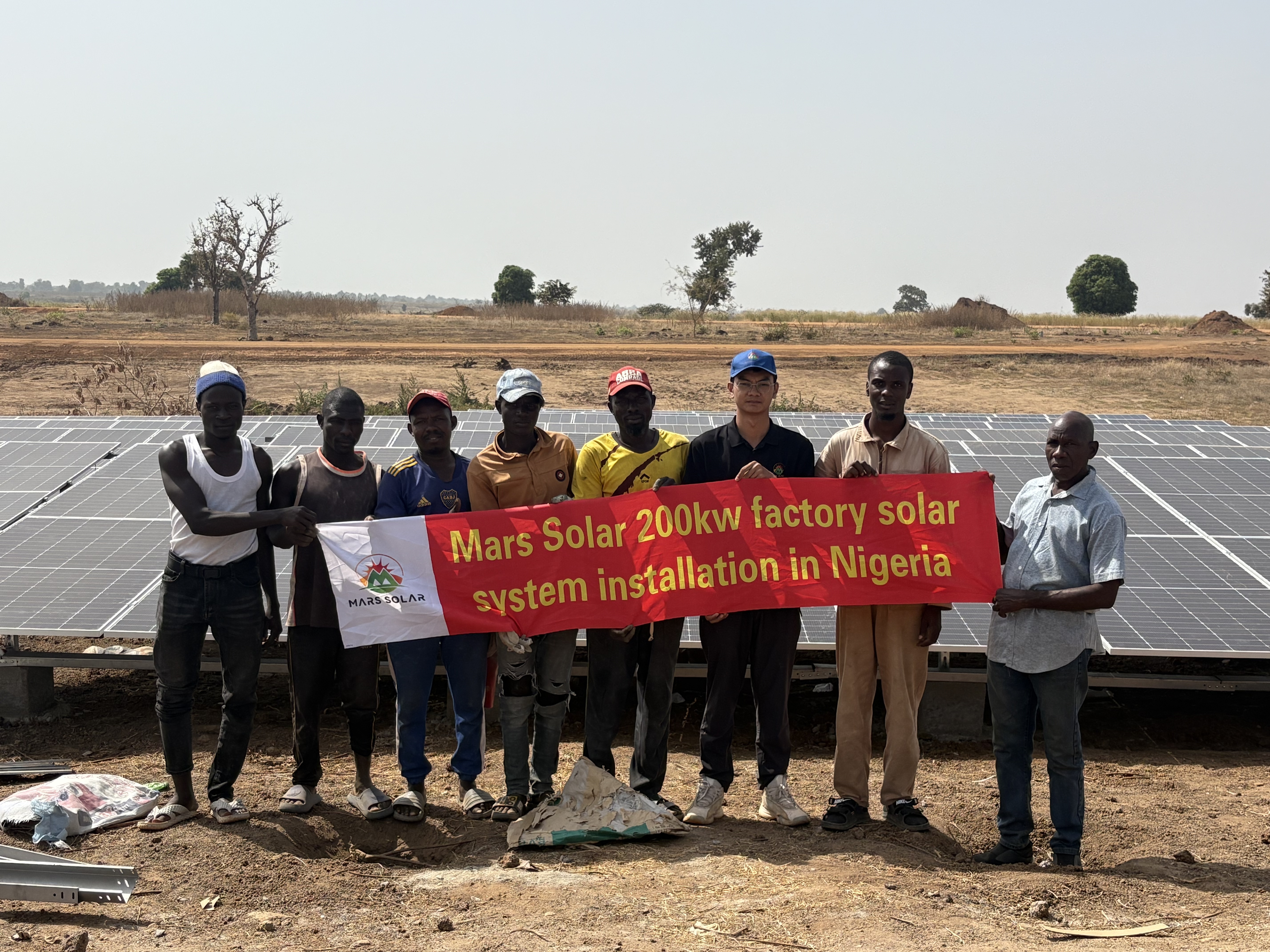 Case Study: 200kW Solar Power System Project for a Rice Mill in a Remote Area ofProject Overview This is a rice mill located in a remote area of Abuja, Nigeria. The local municipal power supply is unstable, and electricity tariffs have increased multiple times this year. Due to the unreliable grid power, the customer can only oper
Do you like ?0
Read more -
 Solar PV System Expansion: Compatibility, Efficiency & Implementation Guide1. Background and Necessity Early-installed PV systems generally fail to meet the growing energy demands of modern households and enterprises. Compared with replacing the entire system, expansion is a more economical option—but the core question
Do you like ?0
Read more -
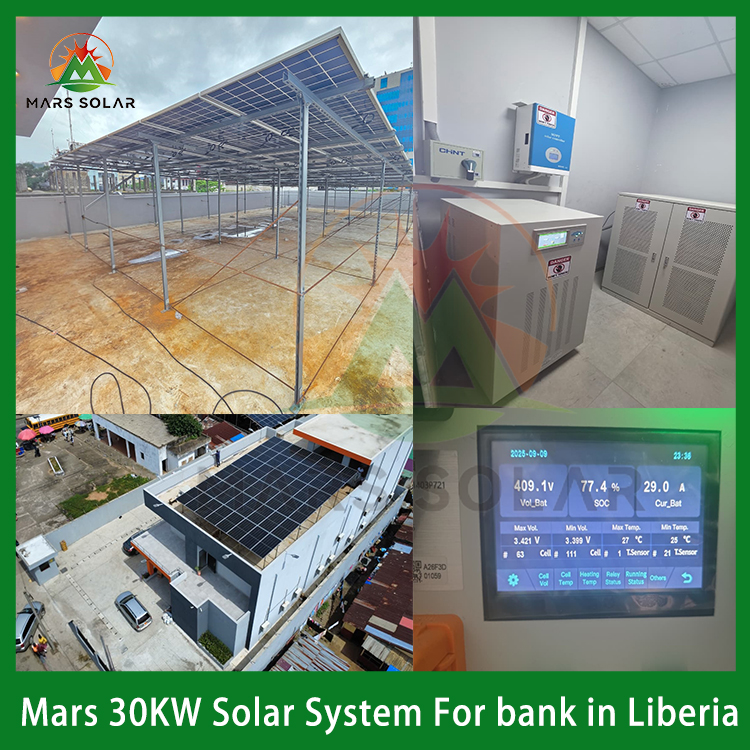 Customized Off-Grid Solar System for a Liberian Bank: Achieving Power IndependenWhen Banks Face the Challenge of "Grid Power Outages and Voltage Fluctuations": A Real-World Solution from Liberia In scenarios where the power grid is unstable and manual intervention is difficult, how to ensure the 24/7 stable operation
Do you like ?0
Read more -
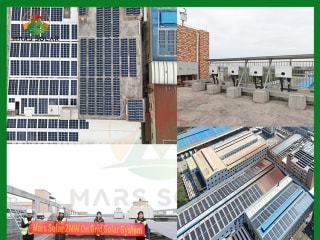 2MW Solar Panel System For Factory2MW mars solar grid-tied solar panel system for factory have designed, produced, and installed in a factory.How does Mars Solar build such a solar panel system for factory? 1. Data collection Before designing the plan, the factory owner vi
Do you like ?0
Read more -
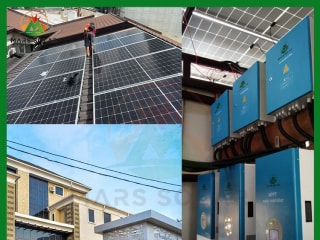 100KW Solar For Hotels And Resorts In NigeriaIn December 2024, the Mars Solar 100KW Nigeria solar for hotels and resorts project was successfully completed. In May 2024, the customer contacted Mars solar and had a series of communications on the solar for hotels and resorts project. The d
Do you like ?0
Read more